
12 September 2024
Insights
16 mins read


‘There’s a new world coming,’ sang Nina Simone, the subject of the unauthorized 2016 biopic Nina that sparked outrage and accusations of colorism when lighter-skinned, aquiline-nosed Zoe Saldana was cast as the beloved iconic singer. The context was both Nina Simone’s well-known pride in her skin color and the pervasive tendency in Hollywood to choose actors with lighter skin shades to play black characters, which one young writer described as, “Hollywood’s acceptable version of Black.”
The whole new world Simone sang about, like the one Martin Luther King Jr famously dreamed about, knows no social hierarchy attached to skin tint. How did we get here and how do we get there?
Origins of Colorism
The writer Alice Walker is usually credited with coining the term ‘colorism’1. In her 1983 book In Search of Our Mothers’ Garden, she defined it as ‘prejudicial or preferential treatment of same-race people based solely on their color.’
This form of prejudice predates the term’s coinage and has many different origins and manifestations. Perhaps its most infamous origin lies in the work of Martinique-born French slave-owner Médéric Louis Élie Moreau de Saint-Méry (1750–1819), who seems himself to have been of mixed ancestry. His 1789 work, Description topographique, physique, civile, politique et historique de la partie française de l’isle Saint-Domingue, proposed a theory of skin color based on 128 categories to create a racist hierarchy that fallaciously conflated skin color with ancestry, social position and even personality attributes. Moreau’s part in constructing the concept of race has had a lasting impact, especially in the United States.
The infamous ‘one drop rule’ was codified into law in some states in the United States, preventing anyone with a black-racialized ancestor to identify as white, which meant they could not enjoy the same rights as ‘whites’. In Australia, by contrast, there were deliberate government policies to ‘breed out the black‘, including stealing children from mixed families to be raised ‘white’. In his book Traces of History: Elementary Structures of Race, Australian historian Patrick Wolfe explained the contrasting aims that created this difference: the descendants of the Transatlantic slave trade were valued as a source of cheap labor, while the descendants of Indigenous people were seen as a threat to be eliminated.
Saying the Unsaid
Race, as I’ve written about, is a complex cluster of ideas that shape shift to adapt to a multitude of different contexts. My own lived experience of racism comes from a lifetime of being othered or excluded in Australia for attributes that set me apart from the Anglo ‘norm’: my name (my first name was changed from Panagiotis to Peter to lessen the impact); my cultural attributes (linguistic from having Greek as a mother tongue; food preferences; religion etc); and even my olive skin color. I am also aware of my relatively light-skinned and European privilege.
Author of The Raceless Antiracist, Sheena Mason, has illuminated the tangle of proxies that make up the concept of race while advocating the need to undo the concept of race as a vital step towards ending racism. Pulling apart and examining its various moving parts supports the work of dismantling it. One of the stickiest components of race is skin color.
American actress/singer Kelly Rowlands, who says her experiences of colorism affected her to the point where she thought, ‘I just want to be Mariah [Carey] shade’, says colorism has been ‘the unsaid’, adding, ‘I think that it makes a lot of people uncomfortable and…that if we make ourselves aware of it then we can actually move on.’
Colorism and AI
But wait! We’re in the age of AI and machines are unbiased and this will fix the problem, right? Sadly not.
In a Bloomberg article published in June 2023 titled ‘Humans Are Biased. Generative AI Is Even Worse’, its authors conducted an analysis that found image sets took ‘racial and gender disparities to extremes – worse than those found in the real world’. Their analysis included 5,100 images of AI-generated people.
Among many other revealing findings was the discovery that women made up a tiny 3% of the images generated for the keyword ‘judge’, when in reality 34% of US judges are women, and the findings were ‘similar for people of color.’ They drew this conclusion while noting that this analysis was more difficult because of lack of real-world data on skin color as separate from racialization.
University of Michigan professor of public policy Shobita Parthasarathy explains that because AI is trained on historical data it is likely to reinforce biases.
It’s Complicated!
Colorism can sit completely apart from racism, as researcher Dr Avijit Ghosh points out: ‘India happens to be a largely monoracial country, meaning analysis of racial bias is not something that can be directly applied to an Indian dataset. This doesn’t however mean that there isn’t discrimination due to someone’s physical appearance.’
Ghosh writes, ‘Colorism happens to be a wild and pervasive axis of discrimination in Indian society, hurting people’s employment, perceptions of beauty, ties into the also complicated hierarchical caste system, and generational wealth. Deplorably, these almost disparate looking social evils have somehow all become tied to one’s skin tone in Indian society.’
Freelance writer Rae Chen writes that in many places, ‘colorism exists more as a status symbol than a racial one.’ She explains that ‘pale skin was seen in ancient China as a signifier of being able to stay indoors during the daytime rather than being outside working, and a pale complexion became synoymous with nobility and wealth in Chinese culture. The paler you are in most of Asia, the more socioeconomic currency is afforded to you based off of your looks.’ Western and eastern colorism, she notes, are different but produce many of the same effects.
It’s human therefore it’s complicated. While the expanding market for skin-lightening products was US$15 billion in 2023, ‘fuelled by a growing middle class in the Asia-Pacific region and changing demorgraphics in Africa and the Caribbean’, the self-tanning products market size, which is dominated by Europe, is also big (US$1.09 billion) and growing.
Although race is often conflated with skin color (as when someone says, ‘I’m not racist; I don’t see skin color,’) racism can be perpetrated against people regardless of their biological appearance, and solely on the basis of cultural identities, which may reveal themselves through names (like ‘Mousaferiadis’) or other markers, such as accents or attire (like a skull cap or veil).
Having light skin protects racialized people in places like North America and Australia from many of the worst impacts of racism, like the common act of racial profiling in contemporary policing, but exposes them to other (even if potentially less harmful) impacts that often manifest around having their identity challenged. Some Indigenous people in Australia identify themselves as Blak (or blak), a twist on the word ‘black’ that was conceived by Erub/Mer and K’ua K’ua artist Destiny Deacon to help undo the fallacious conflation of skin color and ancestry.
Or someone’s skin color could be judged acceptable while their perceived race is not.
The movie and TV series Wrong Kind of Black was named after a real incident that was described by Boori Monty Pryor in his classic 1998 memoir, Maybe Tomorrow. Pryor had been offered a job DJing in Perth. He turned his life upside down to relocate to the other side of Australia for the opportunity, but when he arrived at the club the owner told him, ‘We have a bit of a problem here…We knew you were black but we didn’t know you were an Aboriginal.’ Pryor recalled:
I looked across the table and one of the DJs that was from Hawaii was almost as dark as me. In their eyes, that was okay. So, I could have been black Indian, black Samoan, black anything, as long as I wasn’t black Aboriginal. I was the right colour but I was the wrong race. The owner finished by saying, ‘We’ll pay you out but we can’t have you working here.’ (Pryor uses the word ‘race’ here as a proxy for identity.)
A World Tour of Colorism
If you are not affected by colorism, it is easy to miss how pervasive it is, so here’s a quick tour:
- Oscar-winning actor Lupita Nyong’o described growing up in Kenya ‘feeling uncomfortable with my skin colour because I felt like the world around me awarded lighter skin.’
- Rae Chen wrote that ‘Colorism is handled differently by each culture, and I experience it most prominently when I travel to China. Fair skin is so prized in some Asian cultures (including China, Korea, and Japan) that strangers will follow me for blocks, staring.’
- Dr Meena Signh, an MD, dermatologist and surgeon in Kansas, wrote that ‘Dermatology is one of the least diverse, most competitive fields of medicine. It does not adequately educate its trainees to provide care for patients of all skin/hair types. Our patients share how they have been told by some of their dermatologists, they do not feel comfortable treating them due to the color of their skin and/or texture of their hair. Yet, there are many who want programs/policies to address these issues eradicated! Even more insulting, some stated that allowing more underrepresented minorities into dermatology may lower standards for patient care. Clearly, they forgot how patient care for those with skin of color is already not great in this field. We are tired of fighting to prove that #WEBELONGHERE.’
- Priscilla Kounkou-Hoveyda, Founder of the Collective for Black Iranians, described racism as a ‘different kind of war’, and said: ‘I wish these conversations had happened 20 years ago, so that it would have informed the people who told me to eat more sabzi [herbs] because it’ll make you white, or the people who rubbed my skin a little stronger.’
- Alisia G. T. T. Tran, Hsiu-Lan Cheng, Jason D. Netland, and Elisa R. Miyake concluded in an academic paper, ‘Far From Fairness: Prejudice, Skin Color, and Psychological Functioning in Asian Americans’, that skin color is ‘a pertinent factor relevant to the short-term and long-term mental health and social experiences of Asian American women in particular.’
- The Pew Research Center shares data on how US Latinos perceive skin color as a factor affecting their lives:
![For US Latinos, skin color shapes life experiences. Graph shows: Having darker skin color hurts Latinos' ability to get ahead, 62%; Having a lighter skin color helps Latinos ability to get ahead, 59%; Skin colors shapes their daily life experiences, 57%; Discrimination based on race or skin color is a very big problem in the US, 48% [Source: National Survey of Latinos conducted March 15-28, 2021]](https://atlas.culturalinfusion.com/wp-content/uploads/2024/09/Latinos.png)
Rather than giving more examples, I open the challenge to anyone who can find a nation whose populace does not have some experience of colorism.
The need to measure skin color seems fairly obvious for areas like dermatology, cosmetics and photography. I trust that the need to include skin color as a measure for people working in the Diversity, Equity and Inclusion field in our globalized world is also by now clear enough.
It turns out that US-based surveys (for example) are increasingly asked to better capture skin color as an aspect of racialized appearance.
The next question is, How?
Measuring Skin Color
Cultural Infusion’s Atlas was created to enable organizations to better measure, acknowledge and act on their inclusion and development strategies. It collects data from groups of people through a survey that is underpinned by what we call the Global Database of Humanity: a collection of datasets comprising 45,000+ categories. We believed we had adequately captured the racialized dimension of skin color through a survey question that asked about appearance based on geographic locations (including, for instance, West African, South Asian and Southern European) and some other racialized identity markers including Black, Mixed heritage, Indigenous, Hispanic and White.
We have since reconsidered the question. In the wake of widespread colonization and migration, appearance cannot be meaningfully linked to geographic location, and in any case, we already capture data on people’s ancestry, place of birth, nationality and ethnicity.
What We Decided
I led a literature review and consulted with colleagues and experts across various fields. Many aspects of appearance are racialized or discriminated against, including facial features, hair, height and so on. The decision to create a separate dataset and accompanying survey question for skin color/shade was based on the primary role of skin color in racial categorization.
The first thing I learned is that there is no standardized scale to measure skin color. The Fitzpatrick scale, still in wide use, was developed in 1975, initially to estimate the response of different skin types to ultraviolet light. This scale at first only included four categories of pale to medium skin shades and only later added darker skin shades. Many still criticize it for Eurocentric bias.
Some other existing databases that we investigated include von Luschan’s Chromatic Scale (with 36 categories), the Lancer Ancestry Scale (with 5 categories), the Massey-Martin Skin Color Scale (with 11 categories), the Pantone Skin Tone Guide (with 138 categories) and the Monk Skin Tone Scale (with 10 categories). We considered many issues, like the distinction between skin shade and skin tone, all with an eye to creating the most inclusive and practical survey experience.
Of these databases, the Monk Skin Tone Scale, which is an open source database developed in partnership with Google, has been well received for the most part, though there have been criticisms of it, which include claims of bias against skin with yellow tones.
We also found ten options excessive for our purposes, making it too difficult for most people to choose between several and too difficult for our data analysts to measure against other identity dimensions in a meaningful way. Few people have the even skin tone that makes self-identification easy, so we decided that fewer options would be better, and we also decided against a visual scale, which can vary according to the screen used to display it, opting instead for words.
In the end, we chose just five categories, along with the options ‘not listed’ and ‘prefer not to answer’ to accompany the question, ‘What best describes your skin shade?’
| Light |
| Medium light |
| Medium |
| Medium dark |
| Dark |
| Not listed |
| Prefer not to answer |
We worried that some people may not see a description of their own skin in these scant words and that there would be questions about different skin tones, suntans and so on, but in the end we decided that the word ‘best’ creates enough space for people to understand that it’s ok to have a few doubts and they just need to give us the answer that they believe is the most accurate. Perhaps in summer they observe that their skin shade goes from medium light to medium dark – well, they can average it out and choose ‘medium’.
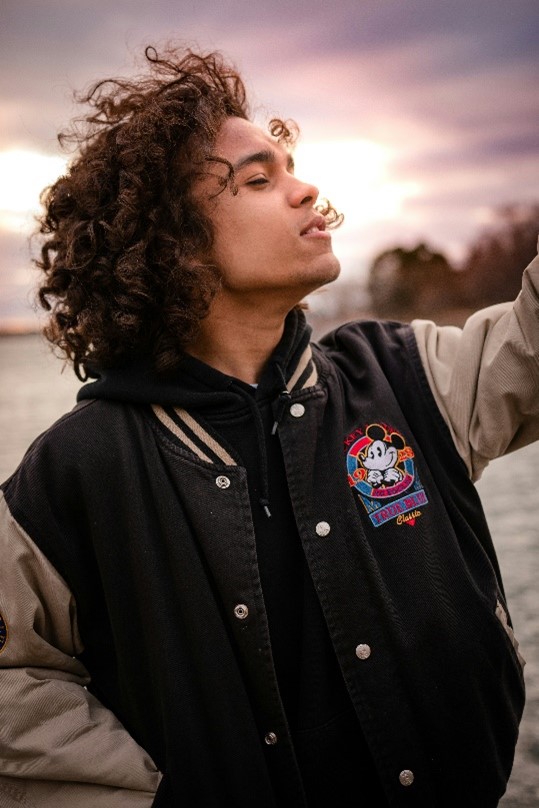


One of the irrational aspects of the race construct is revealed by the fact that someone who, for instance, identifies and/or is racialized as black, brown or person of color (POC) may have a skin tone several categories lighter than someone who identifies and/or is racialized as white. This reveals the arbitrary and inconsistent nature of racial categories, which often rely more on societal perceptions and historical constructs than on objective physical traits.
Our decision does not mean giving up the categories ‘White’ and especially ‘Black’ that still have deep relevance to many people. These categories can be selected from our ‘cultures’ dataset in answer to the survey question, Which culture/s do you identify with? but not from our ‘skin color/shade’ dataset, since no one’s skin is literally white or black. By categorising people by skin color/shade, we aim to add this attribute to an accurate, nuanced reflection of the diversity within groups.
Organizations will thereby receive information about how skin color/shade plays out in their workforce and where gaps or imbalances may exist. We can start to ask questions like, Is your workforce representative enough if all your staff are on average three shades lighter than the people in the communities they serve?, and these questions will be situated within the appropriately complex context of the entirety of human identity. We think this approach will move us further along in dismantling the harmful concept of race, encouraging a more nuanced understanding of diversity that is more aligned with contemporary understanding rather than fallacious outdated labels.
What Next?
English writer/actor/presenter Hemah K says it eloquently, ‘I really feel that it’s important that everyone understand that they can join in the conversation, feel comfortable enough to ask questions, because I don’t like people feeling like they have to be afraid to have the conversation. I’d rather us all be honest and open, and that’s one thing I don’t like about a lot of social media because it seems like if you get something wrong in public people are onto you, and it’s just like, “You got this wrong!”’
She added, ‘If we don’t talk about it, it doesn’t stop.’
Anthropologist Nina Jablonski confirms our findings: ‘The durable associations of skin color with behavior and human potential continue to adversely affect human societies in most countries. The eradication of color memes and racial templates is possible…but can only be accomplished through a sustained, multi‐generation commitment.’
We look forward to archiving the color skin database once the evidence shows that skin color no longer affects people’s prospects.
- For consistency and clarity, we have used US spelling in this article. ↩︎