
26 February 2026
3 mins read


Published Paper
Title: Career Pathways in Diversity, Equity, and Inclusion: A Comparative Analysis of Australia and the United States
Published on: Open Journal of Social Sciences (2026)
Authors: Madhavi Vishwanatha, Mary Legrand, Nicole Lee, Rezza Moieni
Get this paper
Diversity, Equity and Inclusion roles have expanded rapidly over the past decade. Many organisations now employ DEI specialists, managers or executives.
But one important question remains unclear:
How do people actually build a career in DEI, and what makes them stay?
In our new research published in the Open Journal of Social Sciences, we analysed DEI career pathways in Australia and the United States. We also tested whether artificial intelligence can help predict long-term career persistence in this field.
Why DEI Career Paths Are Hard to Define
Unlike traditional professions such as law or accounting, DEI does not follow a single structured pathway.
Professionals enter from areas such as:
- Human Resources
- Organisational Development
- Psychology
- Sociology
- Government and NGO work
This diversity of entry points makes it difficult to understand how stable DEI careers are and what influences long-term commitment.
We wanted to bring data into that discussion.
How We Studied DEI Careers
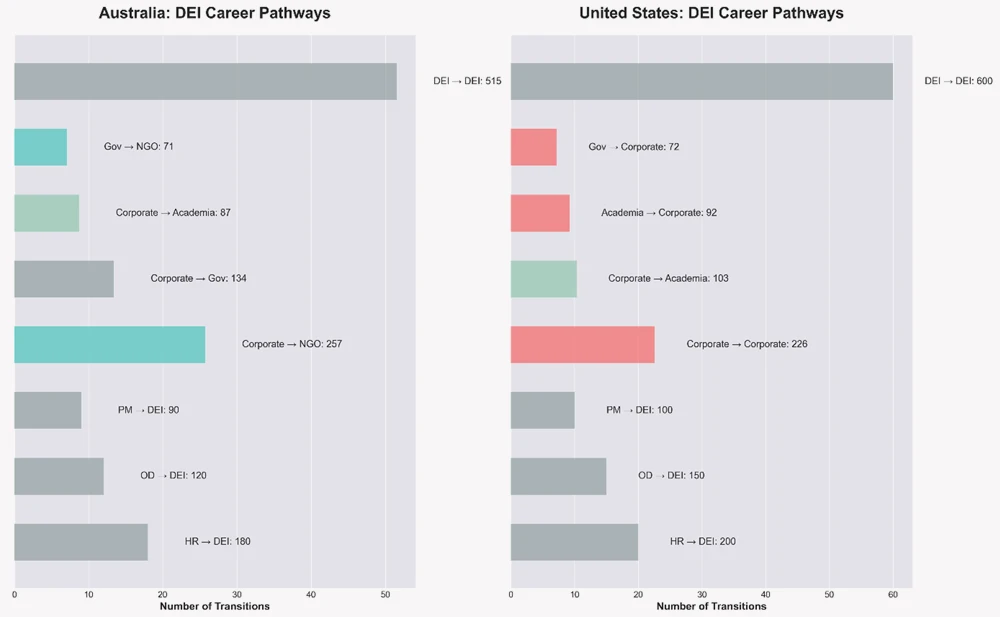
We analysed nearly 2,000 LinkedIn profiles of DEI professionals across Australia and the United States.
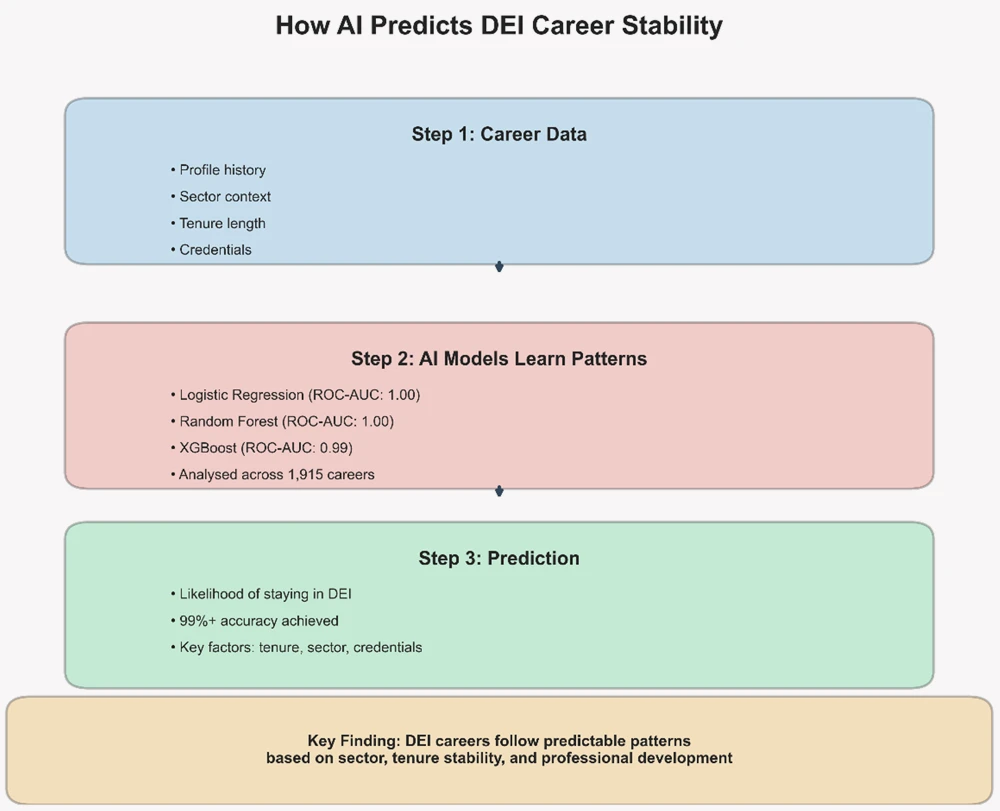
We then used three analytical approaches to predict whether someone would remain in a DEI role:
- Logistic Regression, a statistical method that estimates the probability of an outcome
- Random Forest, a machine learning method that combines multiple decision models
- XGBoost, an advanced algorithm designed to detect complex patterns in data
In simple terms, these models look at multiple career factors at once and learn patterns that help forecast outcomes.
What We Found
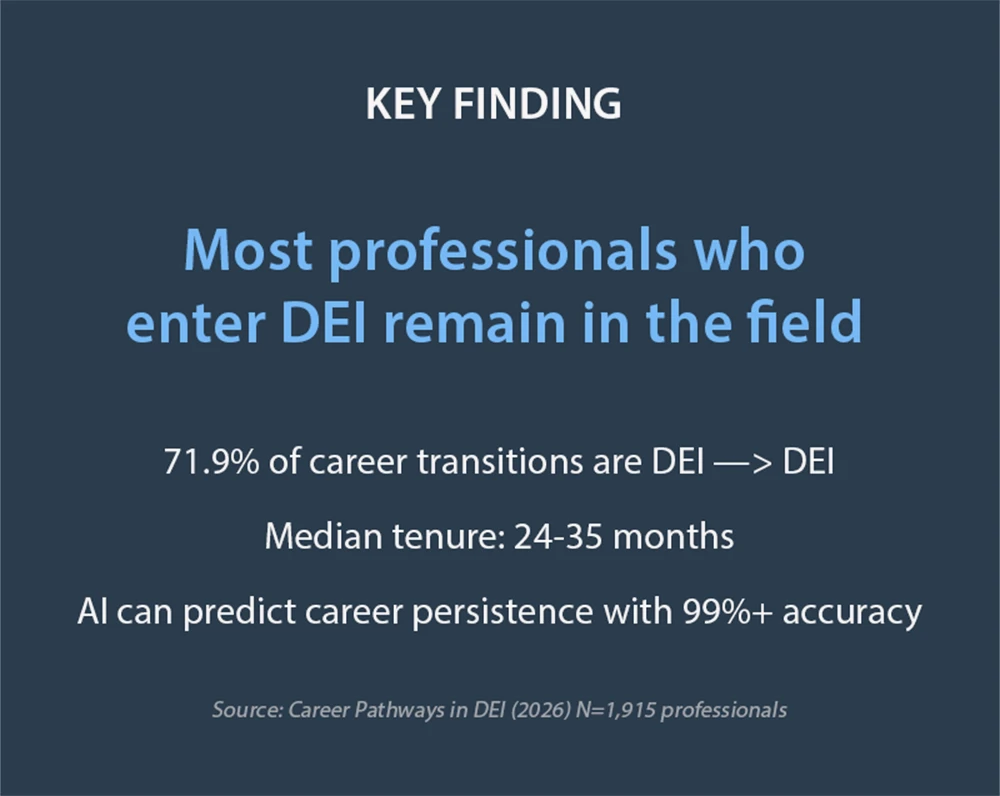
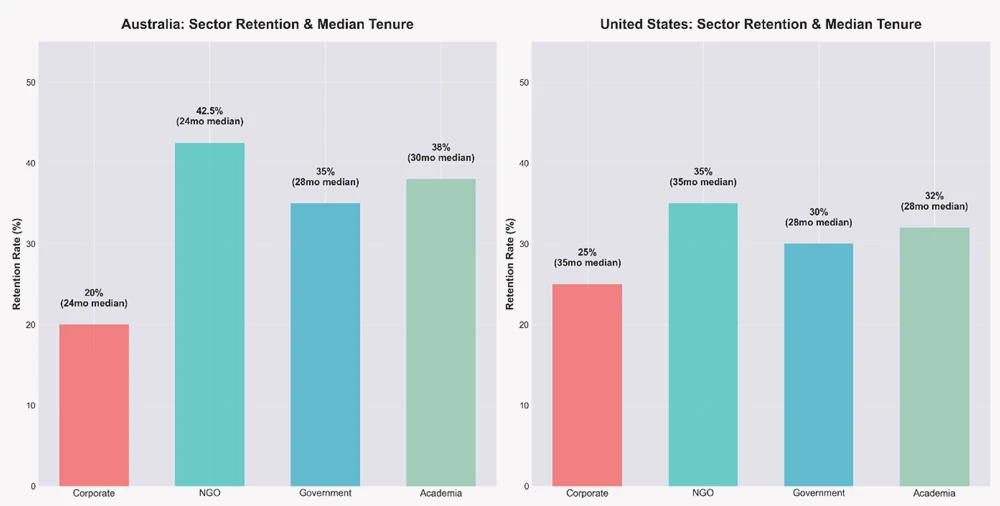
First, DEI careers are not random. Once individuals enter the field, most remain within it.
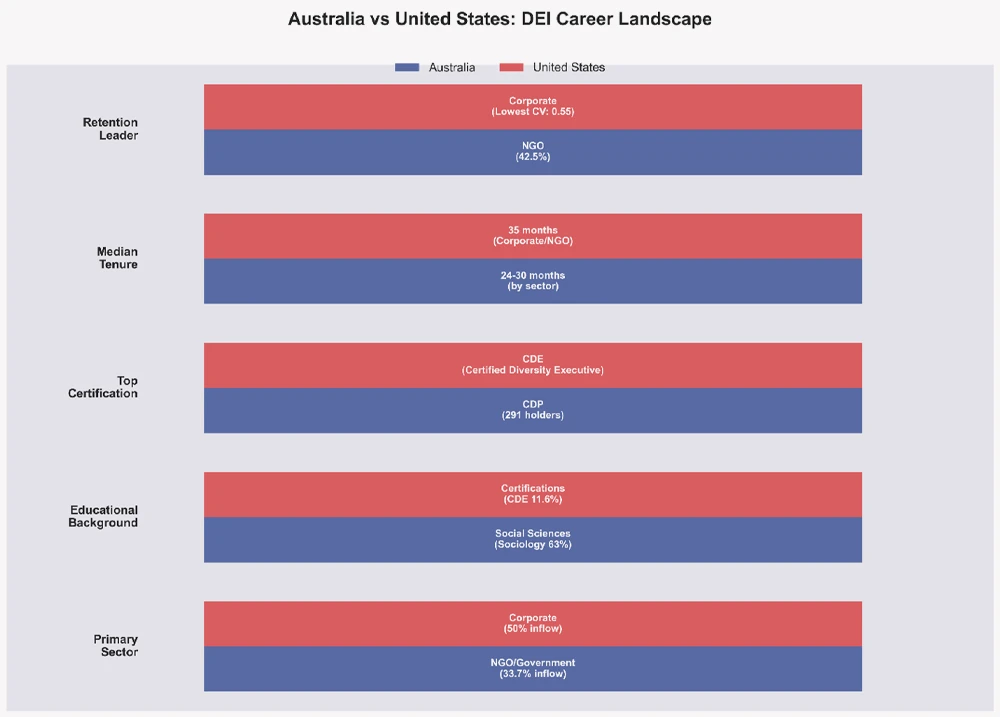
Second, national differences are clear.
In Australia, DEI roles are strongly linked to government and the not-for-profit sector. In the United States, DEI careers are more heavily centred in corporate organisations.
Third, professional backgrounds differ. Australian practitioners more commonly hold degrees in social science fields, while U.S. professionals are more likely to hold formal DEI certifications.
Can AI Predict Who Stays?
All three models performed extremely well in predicting whether someone would remain in a DEI role.
We measured performance using a standard accuracy metric that tests how well a model distinguishes between two outcomes. The results showed very strong predictive power.
This tells us that factors such as sector, career history and credentials contain meaningful signals about long-term career stability.
Why This Matters
DEI is increasingly positioned as a strategic priority. Strategic priorities require stable expertise.
By understanding career patterns more clearly, organisations can:
- Plan workforce development
- Anticipate turnover risk
- Strengthen internal capability
More broadly, this research shows that combining career mapping with machine learning provides practical insight into emerging professions.
DEI as a field is still evolving. Evidence-based understanding can help ensure it becomes not only important, but sustainable.