
9 April 2026
Events
4 mins read
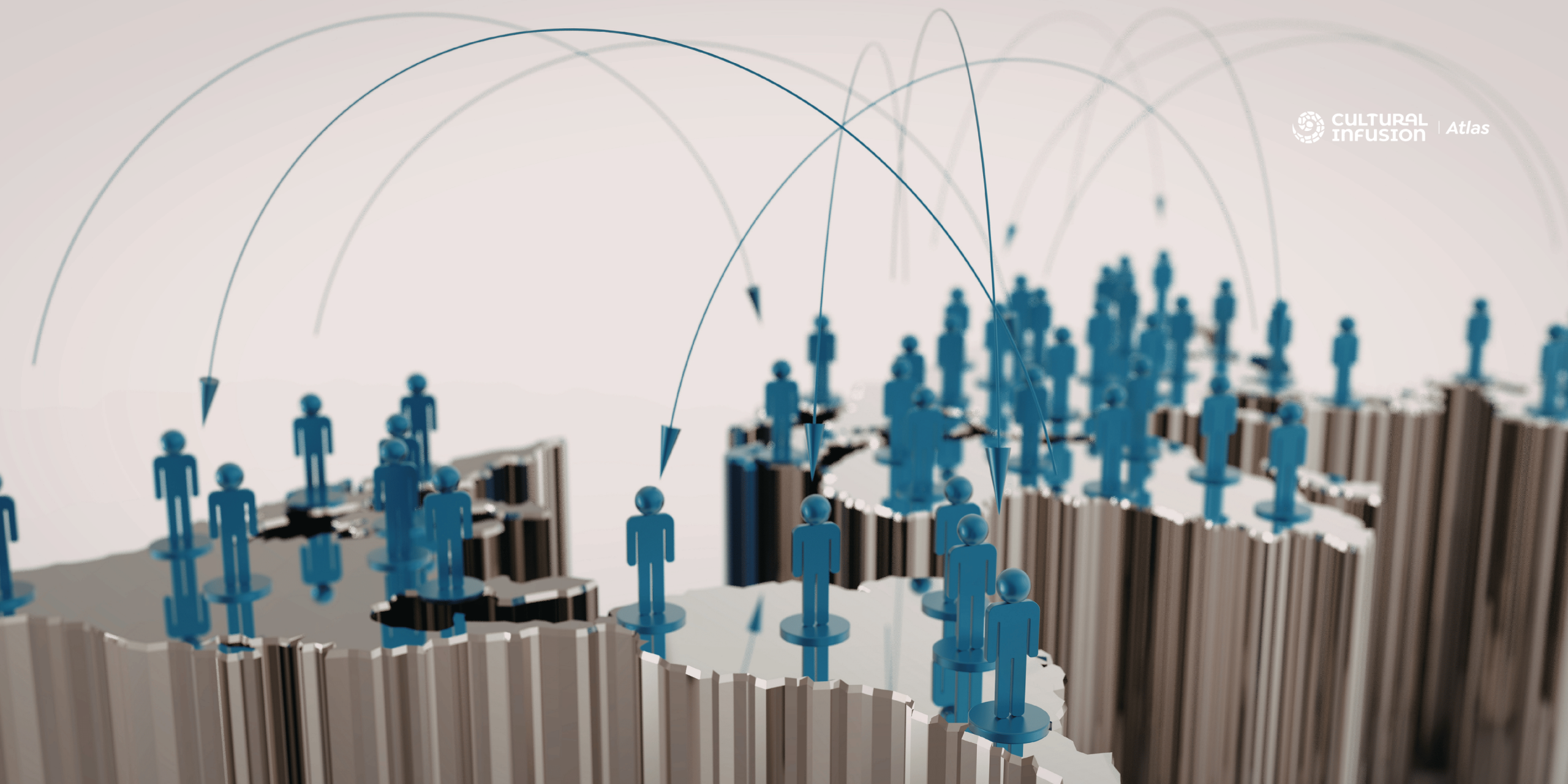

Inclusion today is a global challenge. Organisations operate across jurisdictions, cultures and time zones through remote and hybrid teams. Yet many inclusion strategies remain rooted in static, centralised models. So how do we build genuinely inclusive organisations that function across cultures?
Today, data teams are becoming the architects of decision-making itself. The shift towards DataOps, MLOps, automation and measurable impact is both a technical and cultural transformation. We are moving from siloed to integrated systems, where data flows continuously and decisions are increasingly machine-assisted. So we primarily need to think about how we shape the next generation of data teams in an AI-driven world.
Technology plays a crucial role in enabling inclusive collaboration across remote teams. We have seen an explosion of platforms designed to connect people but connection does not automatically translate into feelings of belonging. Digital environments can replicate or even amplify existing inequalities. Inclusive collaboration requires not just access, but voice: who is heard, and who is represented in decision-making and outcomes.
Managing diversity across geographies means recognising that identity, culture and lived experience are highly contextual. Cultural protocols, expressions and norms in Frankfurt may differ significantly from Melbourne, São Paulo or Nairobi. The organisations that succeed will be those that can adapt global principles to local realities without essentialising human identity and without losing coherence.
Inclusion of whose reality?
With this shift comes a fundamental question: whose data and whose reality are these systems built upon and whose are they serving?
The next generation of data teams must expand their definition of excellence. Technical capability remains essential, but it is no longer sufficient. Teams must also be equipped to understand the social and cultural dimensions of data, which means understanding how it is collected, categorised and interpreted.
Oversimplified or reductive models risk erasing human complexity and reinforcing bias at scale. In a global context, this becomes even more pronounced.
The world is becoming ever more socially complex. A future-ready team is one that reflects diversity not only in its composition, but in its thinking. It integrates perspectives from different cultural contexts and disciplines.
If we want thriving workspaces and societies, we need to design systems with an all-inclusive understanding of human identity. We also must embed governance structures that prioritise accountability.
HumanOps
We are already seeing the convergence of DataOps and MLOps in practice. The next step is the integration of what we might call ‘HumanOps’: the intentional incorporation of human complexity into systems. This includes rethinking how we define cultural diversity and measure outcomes. Cultural Infusion defines cultural diversity as:
The precise measurable variety, disparity, balance and mutuality within a defined group at a defined moment across the four categories of place, heritage, language, and belief system, alongside identity attributes that may be learned or biological.
For organisations operating across borders, appreciating cultural nuance and embedding inclusion into their data architecture as a foundational principle will reap immediate benefits in workforce engagement and will position them to scale responsibly.
The opportunities are significant. By embedding global inclusion strategies into the design of systems and teams, organisations can move beyond compliance-driven approaches towards genuinely adaptive, resilient models. This means empowering local voices while maintaining global coherence, leveraging technology without losing humanity and building teams that are as culturally literate as they are technically skilled.
In the age of AI, success will be measured by our ability to create systems that reflect and respect the full diversity of human experience. This is what will drive long-term, sustainable efficiency and productivity.
The future of inclusion and the future of data are one and the same. Organisations that recognise this and adapt accordingly will lead the world.
Join me for two lively panels at Tech Show Frankfurt 2026 from 6 – 7 May, where we will be discussing these ideas and more!